

Hi,
Lately I created two threads describing my experiment on DE safety razors parameters:
Takeaways from parameters testing
One thing I realized during testing is that solid blade support makes for a super smooth shave. But it’s tricky to get that level of support without messing up other things, like the guard span or the range of shaving angles.
Another thing I noticed was the importance of blade gap. If it’s too big, the skin gets pulled under the blade, leading to nicks. Yet, my tests also showed that larger blade gaps enhance both efficiency and smoothness, making it a goal worth pursuing.
So, when designing this razor, I aimed for a super-rigid blade setup with a decent-sized blade gap. At the same time, I didn’t want to sacrifice any other key factors. Somehow, I arrived at this design:
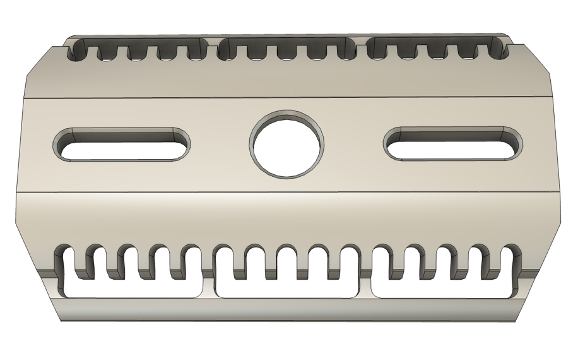
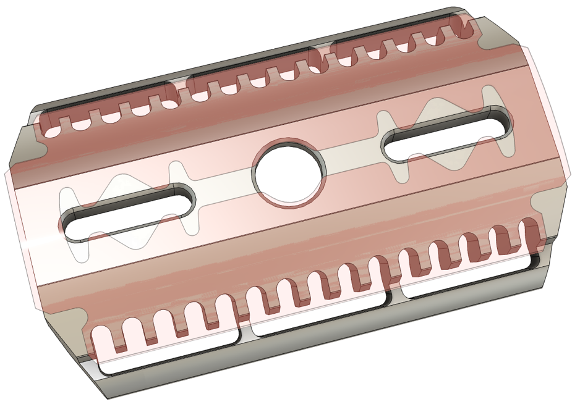
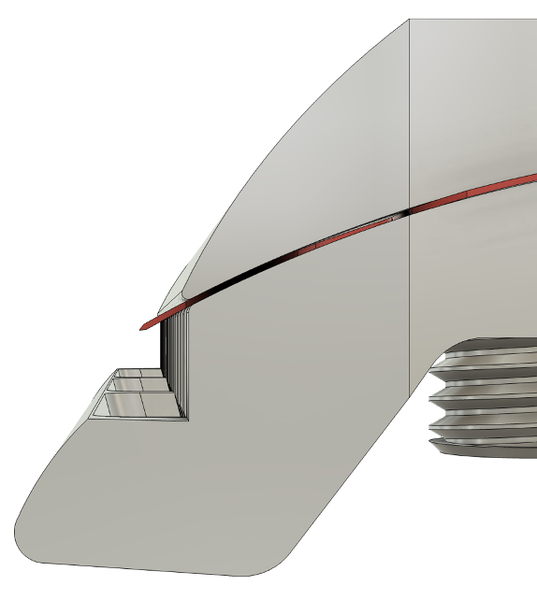
Let me explain the main features (I’ll keep it brief because I know this is already getting long).
Blade Support
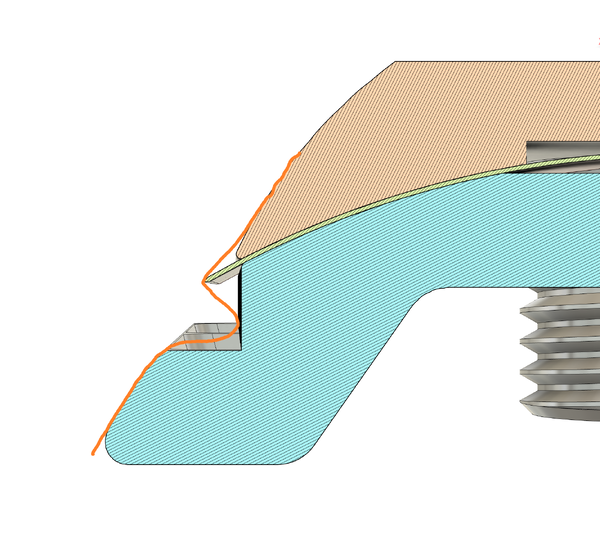
I’ve designed the baseplate so it supports the blade as much as possible, with less than 1 mm of the blade’s free end exposed.
You’ll notice, though, that the blade isn’t supported uniformly across its length. There are special grooves beneath the blade, and these grooves is the most important feature of the whole design. They keep the baseplate from sticking out too much and help maintain proper lather and hair channels. A lot of razors with great blade support offset the channels outward, which increases the guard span. That can make the razor more aggressive and reduce the range of shaving angles you can use.
With these grooves, I’ve managed to keep everything adjustable while still giving the blade solid support and providing proper lather channels – so far I didn’t face any issues with clogging and rinsing at all. And even though the grooves leave small gaps under the blade, they’re tiny enough that the blade stays super rigid all the way across.
Blade Gap
Right now, I’m using a 1.5 mm blade gap.
I tested gaps as big as 2.2 mm, but I didn’t feel any real benefits beyond 1.5 mm with the 0.10 mm blade exposure I’ve been using. So, I stuck with 1.5 mm.
If you look at the baseplate from the side, you’ll notice that the grooves don’t just support the blade - they also help protect the skin from getting pulled under.
With most razors, a larger blade gap can cause the skin to get caught, leading to nicks. But in this design, the grooves act as a kind of barrier, so the skin stays protected.
And it works! I’ve been shaving with a 1.5 mm gap and 0.10 mm exposure, and the shaves are incredibly smooth - no nicks, no irritation.
Regular razor (adjusted to 1.5 mm blade gap, hence the gap between the baseplate and the cap):
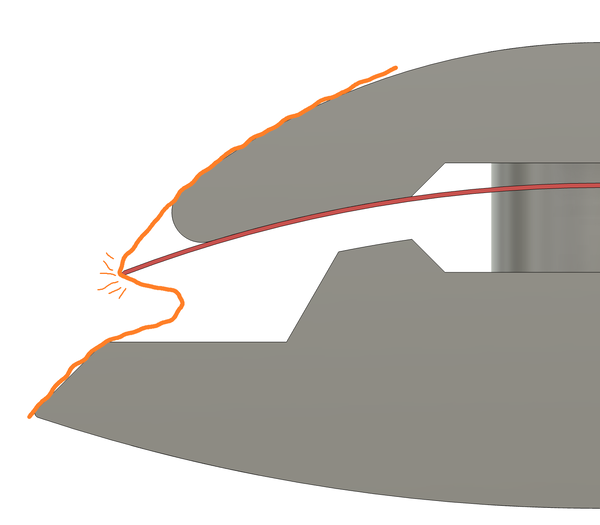
My proposal:
Shaving Experience
Of course, a design only matters if it actually works - and this one works really well.
I’ve shaved with 37 different razors while testing parameters, plus I own quite a few myself. None of them come close to the latest version of this razor.
For context, I’ve always struggled with razor bumps, especially on my neck. Some razors were better than others, but I always had to compromise between getting a close shave and avoiding irritation.
Not anymore. For the first time ever, I can get a super-close shave with zero irritation. No feedback from alum, no bumps the next day - nothing.
In fact, the improvement has been so significant that I can now shave every evening. Before this, I had to wait at least three days between shaves. Going from 72 hours to just 24 hours without irritation feels amazing.
This razor is super smooth, satisfying, and a joy to use.
Wrapping up
I’m still tweaking a few minor details and testing different setups, but I’m already really happy with how it turned out. Honestly, I’m not sure what else I’m looking for, but there’s always room to learn and improve.
I spent a lot of time browsing through thousands of images, patents (both valid and expired), and design protections to see if anything similar to my design already existed. So far, I haven’t found anything like it, and I really hope I haven’t overlooked something. Otherwise, this would just be a knockoff.
That said, to protect my design, I’ve applied for intellectual property rights for the baseplate. My application has been processed and published by the Swedish Intellectual Property Office (PRV), and I now have six months to extend the protection further.
Lately I created two threads describing my experiment on DE safety razors parameters:
- https://www.atgshaving.com/threads/understanding-de-safety-razors-parameters.28601/
- https://www.atgshaving.com/threads/yet-another-parameter-of-de-safety-razors.28603/
Takeaways from parameters testing
One thing I realized during testing is that solid blade support makes for a super smooth shave. But it’s tricky to get that level of support without messing up other things, like the guard span or the range of shaving angles.
Another thing I noticed was the importance of blade gap. If it’s too big, the skin gets pulled under the blade, leading to nicks. Yet, my tests also showed that larger blade gaps enhance both efficiency and smoothness, making it a goal worth pursuing.
So, when designing this razor, I aimed for a super-rigid blade setup with a decent-sized blade gap. At the same time, I didn’t want to sacrifice any other key factors. Somehow, I arrived at this design:
Let me explain the main features (I’ll keep it brief because I know this is already getting long).
Blade Support
I’ve designed the baseplate so it supports the blade as much as possible, with less than 1 mm of the blade’s free end exposed.
You’ll notice, though, that the blade isn’t supported uniformly across its length. There are special grooves beneath the blade, and these grooves is the most important feature of the whole design. They keep the baseplate from sticking out too much and help maintain proper lather and hair channels. A lot of razors with great blade support offset the channels outward, which increases the guard span. That can make the razor more aggressive and reduce the range of shaving angles you can use.
With these grooves, I’ve managed to keep everything adjustable while still giving the blade solid support and providing proper lather channels – so far I didn’t face any issues with clogging and rinsing at all. And even though the grooves leave small gaps under the blade, they’re tiny enough that the blade stays super rigid all the way across.
Blade Gap
Right now, I’m using a 1.5 mm blade gap.
I tested gaps as big as 2.2 mm, but I didn’t feel any real benefits beyond 1.5 mm with the 0.10 mm blade exposure I’ve been using. So, I stuck with 1.5 mm.
If you look at the baseplate from the side, you’ll notice that the grooves don’t just support the blade - they also help protect the skin from getting pulled under.
With most razors, a larger blade gap can cause the skin to get caught, leading to nicks. But in this design, the grooves act as a kind of barrier, so the skin stays protected.
And it works! I’ve been shaving with a 1.5 mm gap and 0.10 mm exposure, and the shaves are incredibly smooth - no nicks, no irritation.
Regular razor (adjusted to 1.5 mm blade gap, hence the gap between the baseplate and the cap):
My proposal:
Shaving Experience
Of course, a design only matters if it actually works - and this one works really well.
I’ve shaved with 37 different razors while testing parameters, plus I own quite a few myself. None of them come close to the latest version of this razor.
For context, I’ve always struggled with razor bumps, especially on my neck. Some razors were better than others, but I always had to compromise between getting a close shave and avoiding irritation.
Not anymore. For the first time ever, I can get a super-close shave with zero irritation. No feedback from alum, no bumps the next day - nothing.
In fact, the improvement has been so significant that I can now shave every evening. Before this, I had to wait at least three days between shaves. Going from 72 hours to just 24 hours without irritation feels amazing.
This razor is super smooth, satisfying, and a joy to use.
Wrapping up
I’m still tweaking a few minor details and testing different setups, but I’m already really happy with how it turned out. Honestly, I’m not sure what else I’m looking for, but there’s always room to learn and improve.
I spent a lot of time browsing through thousands of images, patents (both valid and expired), and design protections to see if anything similar to my design already existed. So far, I haven’t found anything like it, and I really hope I haven’t overlooked something. Otherwise, this would just be a knockoff.
That said, to protect my design, I’ve applied for intellectual property rights for the baseplate. My application has been processed and published by the Swedish Intellectual Property Office (PRV), and I now have six months to extend the protection further.
Last edited:


 ).
).


 and make honest conclusions
